Grab Bar Guide: Everything Homeowners Need to Know Before Installation

LBF Team • August 4, 2026

Most homeowners start thinking about grab bars after a close call. It may be slipping while stepping out of the shower, needing extra support when standing from the toilet, or helping a family member recover after surgery. 


These moments raise a vital question: “Would a grab bar have made this easier or safer?”


Bathrooms remain one of the most common areas for falls inside the home. In fact,
nearly 80% of home falls happen in the bathroom, where wet surfaces, limited space, and everyday movements can create safety challenges. 


Grab bars are non-negotiable for home safety, especially if your loved ones are aging in place, recovering after injury, or facing mobility changes. This grab bar guide will change the way you think about home safety and grab bars. 


This is not a product catalog with a list of items to add to your cart. It’s a planning conversation about home safety, fall prevention, and what it actually takes to make a bathroom work for the people who use it.

Key Takeaways


  • Grab bars improve home safety by providing support during everyday movements like stepping into a shower, standing from a toilet, and moving through slippery areas.


  • The right grab bar placement depends on how you move through your home, your mobility needs, and the areas where you need support.


  • Different types of grab bars, including horizontal, vertical, angled, flip-up, and decorative options, serve different purposes throughout your home.


  • Grab bar materials affect durability, comfort, grip, and appearance, making it important to choose an option that meets your daily needs.


  • Proper grab bar installation requires secure mounting, correct placement, and suitable hardware based on your wall type and bathroom design.


  • DIY installation may work for simple situations, but professional grab bar installation provides better support for tile walls, fiberglass surrounds, complex layouts, and higher fall-risk situations.


  • A Certified Aging-in-Place Specialist (CAPS) can evaluate your home and recommend accessibility solutions based on your movement patterns and long-term needs.


  • Installing grab bars before a fall or major mobility change can help create a safer and more comfortable home environment for aging in place.

Are you looking for an expert resource in accessible spaces, special modifications for persons with mobility challenges, wheelchair accessibility, and more? Contact Lakeshore Barrier Free today.

Why Grab Bars Matter More Than Most Homeowners Think


Many people associate grab bars with hospitals, nursing facilities, or older adults who already have mobility challenges. Today, that view has changed. Modern grab bars improve home safety. They’ve become a common feature in homes designed for comfort, independence, and accessibility.


Why the Bathroom Is Often the Most Challenging Room

According to CDC data, over 14 million, or one in four, adults ages 65 and older (older adults), report falling each year. Nearly 37% of those report an injury requiring medical treatment or restricting their activity for at least one day. 


Most of these falls occur in bathrooms because they combine several risk factors in one small space. Wet floors, slippery surfaces, limited room to move, and changes in height around tubs and showers can make simple movements more difficult.


Whether they’re
aging in place, recovering from an injury, or have limited mobility, your family member could risk falling in a bathroom while: 

  • Stepping over a bathtub edge 
  • Standing on wet shower surfaces 
  • Lowering onto and rising from a toilet 
  • Turning in small spaces 
  • Moving from sitting to standing positions 


However, home safety modifications, like installing grab bars, can prevent falls. Compared with major bathroom renovations, grab bars are one of the simplest accessibility upgrades you can make. Properly installed bathroom grab bars make the aforementioned
everyday activities far easier and safer than most people realize.


6 Types of Grab Bars and How to Choose the Right One

Choosing the right type of grab bar starts with understanding how and where the support will be used. Different designs serve different purposes, and the best option depends on the movement you need help with.


1. Straight Horizontal Grab Bars

Straight horizontal is probably the most common bathroom grab bar style, usually found in family homes and apartments. They provide stable support near toilets, showers, and tubs.


These bars are available in different lengths, typically from 12 inches to 42 inches. Many bathrooms require more than one grab bar because different areas of the room require different types of support.


Generally, this option works well when you need to:

  • Lower yourself slowly 
  • Pull yourself up from a seated position 
  • Maintain balance while standing 


This style is also perfect if you want a grab bar for the shower area. It’s generally installed horizontally along the back wall to provide support while standing or moving.


2. Vertical Grab Bars

Vertical grab bars are commonly installed near shower entrances and bathtub edges. Their design helps with the first movement when entering or exiting a shower or tub. It gives you a secure hand position while stepping over a threshold or changing your body position.


This bathroom grab bar style is useful near:

  • Shower doors 
  • Tub entrances 
  • Bathroom entry points


3. Angled Grab Bars

Angled grab bars combine support during standing and transitioning movements. They are typically useful near:

  • Shower corners 
  • Toilets 
  • Shower seats 


The angle allows your hand position to change naturally as you move from sitting to standing.


4. Flip Up and Fold Down Grab Bars

Flip-up and fold-down grab bars are helpful when space is limited or when wheelchair transfers are part of daily routines. These bathroom grab bars can move out of the way when not needed while still providing strong support when lowered. They are commonly used near toilets where caregivers or wheelchair users need additional clearance.


5. Decorative and Designer Grab Bars

Many homeowners hesitate to install grab bars because they worry about changing the appearance of their bathroom. However, today’s decorative grab bars are available in different finishes that match modern bathroom designs, including:

  • Matte black 
  • Brushed nickel 
  • Oil-rubbed bronze 
  • Chrome finishes 


With so many options available, you can choose a beautiful and easy-to-blend grab bar for your toilet or shower area. It can merge with existing fixtures and not look like medical equipment.


6. Suction Cup Grab Bars: Why They Require Caution

Suction cup grab bars may seem convenient because they do not require drilling. However, they are not designed for situations where someone needs to place their full body weight on the bar.


They may provide light balance support, but they should not replace properly mounted bathroom grab bars for someone with a fall risk. For reliable support, professional installation with proper anchoring is always the better choice.


Grab Bar Materials: What Holds Up and What Feels Right

When selecting a bathroom grab bar, you also need to consider the material. It affects three things that matter every single day: durability, grip, and how the bar feels in your hand.


Stainless Steel Grab Bars

Stainless steel grab bars are one of the most popular choices for bathrooms because they are durable, rust-resistant, and easy to maintain. Grade 304 stainless steel is commonly used in wet environments because it performs well around moisture.


Benefits include:

  • Long-lasting durability 
  • Modern appearance 
  • Easy cleaning 
  • Strong construction 


Some stainless steel bars can feel cold to the touch, so choosing a textured surface can improve grip when hands are wet.


Vinyl Coated Grab Bars

Vinyl-coated grab bars provide a warmer feel and additional grip compared with smooth metal finishes. They are popular in residential accessibility projects because they can feel more comfortable during daily use.


Benefits include:

  • Softer surface 
  • Improved grip 
  • Multiple color options 
  • Comfortable handling 


Some products also include antimicrobial coatings for easier maintenance.


Brass and Brushed Nickel Grab Bars

If you want your bathroom accessories to match existing fixtures, brass and brushed nickel finishes offer a more decorative appearance. These decorative grab bars can provide both function and style when incorporated into a bathroom design.


Nylon Coated and ABS Plastic Options

Nylon-coated and ABS plastic grab bars are lightweight options that may work well in certain applications. Before installation, check the product rating and construction quality. They should match the support needs of the person using it.


Grab Bar Diameter Matters

Grab bar size also affects comfort and usability. ADA recommends an outside diameter of 1¼ inches (32 mm) minimum and 2 inches (51 mm) maximum. This range provides a comfortable grip for most users. A bar that is too thin or too thick can become difficult to hold, especially for someone with arthritis, reduced hand strength, or limited mobility.


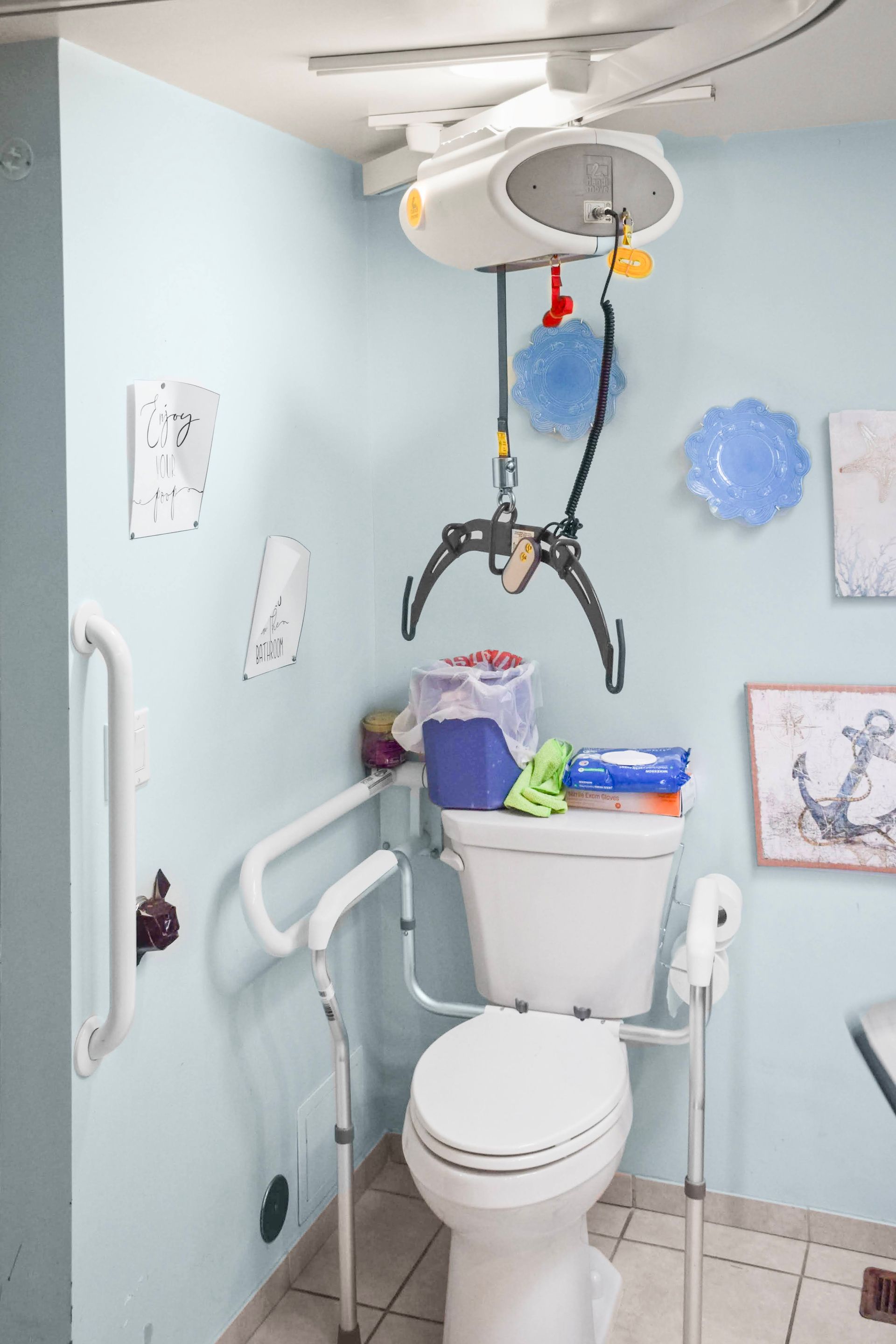
Accessible bathroom with toilet lift, grab bars, and transfer sling under an overhead hoist

Where to Install Grab Bars in Your Home

Choosing the right location is as important as choosing the right grab bar. Even if you choose a strong grab bar, when installed in the wrong place, it may not provide the support you need during daily movements.


Grab Bars Beside the Toilet

Walls beside the toilet are one of the best places for grab bar placement in the bathroom. That’s because sitting down and standing up require balance, leg strength, and controlled movement.


A common setup includes:

  • A horizontal grab bar on the side wall, usually around 42 inches long and positioned about 33 to 36 inches from the floor 
  • An optional horizontal grab bar on the rear wall, usually around 36 inches long and centered behind the toilet 


However, the best grab bar placement in a bathroom depends on the person using it. Someone who stands independently may need different support compared with someone who uses a wheelchair, requires transfer assistance, or has limited upper body strength.


Grab Bars in the Shower or Tub

The shower is one of the most common areas homeowners add support. Water, soap, and changing body positions can make this space harder to use safely.


Common shower grab bar placements include:

  • A vertical grab bar near the shower entrance to help with stepping in and out 
  • Horizontal grab bars along the back or side walls for standing support 
  • Angled grab bars near a shower seat to assist with sitting and standing movements 


If you are planning a complete shower remodel, adding blocking behind the walls during construction can provide more flexibility for future grab bar placements. This additional support inside the wall allows grab bars to be installed where they are most useful instead of only where existing framing allows.


Grab Bars at the Bathtub

Bathtubs create an additional challenge because stepping over the tub wall requires lifting your foot, shifting your weight, and maintaining balance.


A good grab bar for shower and tub areas may include:

  • A horizontal bar along the long wall to support lowering and rising movements 
  • A vertical or angled bar near the entry side to assist with stepping over the tub edge 


The right placement depends on how you enter and exit the tub and where your hand naturally reaches during the movement.


Grab Bars Beyond the Bathroom

Many homeowners focus only on bathroom accessibility, but other areas of the home can also benefit from support features.

  • Hallways: Support rails along longer hallways can help provide stability for individuals who experience balance changes while walking.
  • Beside the Bed or Favorite Chair: Grab bars or transfer supports near frequently used furniture can make sitting down and standing up easier.
  • Entryways and Steps: Support near exterior doors, garage entrances, and small elevation changes can help with safer transitions.
  • Staircases: Grab bars near stair landings can provide extra support when moving between different levels of the home.


Whether you're installing grab bars in the bathroom or any other area, you need professional guidance for
the best placement. At Lakeshore Barrier Free, we help homeowners across Michigan identify areas where simple modifications can improve comfort and independence.


What It Takes to Install a Grab Bar Properly

A grab bar may look simple, but proper installation involves more than attaching a bar to the wall. The strength, placement, and connection method determine whether the grab bar provides reliable support when needed.


Wall Studs and Blocking Matter

A grab bar needs to connect to structural support. Drywall alone cannot support the force created when someone pulls, pushes, or lowers their body weight onto the bar.


Professional grab bar installation typically involves:

  • Locating wall studs behind the surface 
  • Installing mounting hardware correctly 
  • Adding blocking when additional support is needed 


Blocking is additional framing installed behind the wall specifically for grab bar mounting. It provides more flexibility when the ideal location does not line up with existing studs.


Different Wall Materials Require Different Methods

Every bathroom surface creates different grab bar mounting requirements.

  • Tile Walls: Tile requires careful drilling. Incorrect drilling can crack tiles, damage the surrounding area, or create openings where moisture can enter behind the wall.
  • Fiberglass Surrounds: Fiberglass shower surrounds require proper grab bar mounting because they do not provide the same support as framed walls.
  • Drywall and Concrete: These materials also require specific hardware and installation methods based on the structure behind the surface.


Understanding Grab Bar Weight Capacity

Many homeowners look at a grab bar’s weight rating and assume it means the bar supports that exact body weight. However, grab bar weight capacity refers to the amount of force the bar can handle during use.


When someone catches themselves during a slip or uses the bar to pull up from a seated position, the force placed on the bar can be much greater than their actual body weight. ADA guidelines recommend grab bars that can
support 250 pounds of force when properly installed.


Waterproof Sealing Protects Your Home

Wet areas require careful attention to waterproofing. Every screw opening created during installation needs proper sealing. Without correct sealing, water can enter behind the wall and contribute to:

  • Mold growth 
  • Rot 
  • Structural damage


Placement Should Match Real Movement

A grab bar is only useful when you can reach it naturally. If it’s installed several inches away from where your hand needs to go during a transfer, it may not provide the required support.


The best grab bar mounting approach considers:

  • Your height 
  • Range of motion 
  • Daily routines 
  • How you sit, stand, and move 


Whether you want to install only grab bars or need more upgrades,
home modifications like these are best left to the professionals. At Lakeshore Barrier Free, we focus on how you use your home so accessibility features support your actual needs.


DIY vs. Professional Grab Bar Installation

DIY grab bar installation is, of course, more cost-effective, but it may not always be the right choice for the intended home modification. The right choice depends on your bathroom setup, your experience with home projects, and the level of support required.


When DIY Grab Bar Installation May Work

You may go with DIY grab bar installation when the conditions are right. However, even a small mistake in placement or mounting can reduce the effectiveness of the grab bar.


DIY installation may work for:

  • A single grab bar in an accessible location 
  • A wall with clearly identified studs 
  • A standard drywall surface 
  • Someone comfortable using tools such as a drill, stud finder, and level


When Professional Installation Is the Better Choice

Sometimes, you need to hire a professional grab bar installer because the situation demands more experience and planning. Professional help is especially useful for:

  • Tile shower walls 
  • Fiberglass shower surrounds 
  • Bathrooms without existing wall blocking 
  • Multiple grab bar installations 
  • Homes where a person has a higher risk of falling


What a CAPS Certified Installer Brings

A Certified Aging-in-Place Specialist (CAPS) understands how home features affect mobility, independence, and daily routines.


They evaluate:

  • How you enter and exit the shower 
  • How you move from sitting to standing 
  • Where you naturally reach for support 
  • Which modifications fit your current and future needs 


This process is called
environmental access consulting and design, which is one of the core strengths of Lakeshore Barrier Free. When you hire a CAPS-certified grab bar contractor, you get a thorough evaluation of your space before the modifications begin.


The Real Cost of a Poor Installation

If a grab bar is loose, incorrectly positioned, or mounted without proper support, it may not provide the help you expect during a fall or transfer. In other words, a failed installation can lead to injuries, medical expenses, and longer recovery times. Choosing the right installation method helps you feel confident that your accessibility upgrades will provide dependable support.


How to Know When It Is Time to Install Grab Bars

Many homeowners wait because they wonder if installing grab bars is “too early.” In reality, planning ahead can make accessibility changes easier and less stressful.


You may want to consider aging in place home modifications if you notice:

  • Holding onto towel bars, shower doors, or countertops for balance 
  • Difficulty standing from the toilet or shower seat 
  • A recent fall or near fall 
  • Recovery after surgery or an injury 
  • A new health condition affecting movement 
  • A family member beginning to use a walker or wheelchair 


That said, fall prevention for seniors is not only about responding after a problem occurs. It is also about creating a home environment that supports independence as needs change. That’s why many homeowners choose to install grab bars before they need them.


FAQs about Grab Bar Installation


Can Grab Bars Be Installed Without Wall Studs?

Grab bars should connect to strong structural support. Drywall alone does not provide enough support for weight-bearing use. It’s best to have a professional grab bar installer determine the mounting method based on your wall structure and bathroom design.


Do Grab Bars Need to Be ADA Compliant in a Private Home?

Private homes are not always required to follow ADA standards, but their guidelines provide helpful recommendations for strength, size, and placement. Following ADA guidelines can help you create a safer and more accessible bathroom.


How Many Grab Bars Does a Bathroom Need?

The number of grab bars required depends on the bathroom layout and the person’s mobility needs. That’s why a shower or tub may require multiple bars, while toilet areas may need additional support for sitting and standing movements.


Can Grab Bars Be Installed on Tile?

Yes, grab bars can be installed on tile when the correct tools, drilling methods, and mounting techniques are used. Professional grab bar installation prevents tile damage and helps you create a secure connection.


Will Grab Bars Damage My Walls?

A properly installed grab bar would not damage your walls. Professional installation includes proper mounting and sealing methods that protect the surrounding materials and prevent moisture problems.


What Is the Difference Between a Grab Bar and a Towel Bar?

While a grab bar is designed and tested to support weight during movement, a towel bar is designed only for holding towels. The latter should never be used for balance or support.


Should Grab Bars Be Horizontal or Vertical?

Both grab bar styles serve different purposes. Horizontal bars are commonly used for steady support during sitting and standing, while vertical bars often help with entry and exit movements near showers and tubs. Your choice depends on how you move through the space.


Make Your Home Safer with Professional Grab Bar Installation


The right grab bars, installed in the right locations, can make everyday activities easier and provide greater confidence throughout your home. However, this process is not only about choosing a strong product. It is about understanding your space, movement patterns, and your long-term accessibility requirements.


Lakeshore Barrier Free provides professional accessibility solutions for homeowners throughout Grand Rapids, Holland, Muskegon, and Big Rapids. As a veteran-owned company and Certified Aging-in-Place Specialist (CAPS), we help you identify opportunities for practical home modifications that fit your needs.


If you are considering grab bar installation in Grand Rapids or anywhere in the areas we serve, our experts can help.
Schedule a consultation now to discuss your requirements.

Brandon Sawyer

ABOUT THE AUTHOR

Brandon Sawyer is the owner and project manager of Lakeshore Barrier Free, a veteran-owned barrier free remodeling company based in West Michigan. Since co-founding the company in 2017, Brandon has helped homeowners create safer, more accessible spaces through wheelchair ramps, accessible bathroom remodeling, and other home modifications that support aging in place, disability access, and independent living. He is a U.S. Marine Corps veteran and a CAPS-certified aging-in-place specialist. Brandon and the Lakeshore Barrier Free team serve families across Grand Rapids, Holland, Muskegon, Big Rapids, and surrounding Michigan communities with practical guidance and high-quality accessibility solutions.

TALK TO THE EXPERTS OF LAKESHORE BARRIER FREE TODAY!

We believe that everyone should have access to every area of their home! We work directly with you to make sure that every grab bar, bathroom sink, kitchen countertop, patient lift, and more is at the perfect location for you and your loved ones. Call us at (616) 477-2685 or email us at Info@LakeshoreBarrierFree.com

Share this blog

Yellow bedroom with white bed, bedside lamp, window, and framed wall art
By LBF Team July 14, 2026
Transfer pole vs grab bars. Find what fits best for bed, chair, shower, or wheelchair transfers, with practical home modification tips for the elderly and veterans.
Back porch with wooden accessibility ramp and railings beside a white house, overlooking a gravel yard.
By LBF Team July 7, 2026
Learn how to choose the best entrance for a wheelchair ramp at your home and why front door, side door, and garage options carry different practical considerations.
Elevated metal wheelchair ramp with railings beside a brick building over a grassy lawn
By LBF Team July 1, 2026
Need a wheelchair ramp rental in Grand Rapids? Get fast assessment, delivery, installation, and removal for safe temporary access at home.