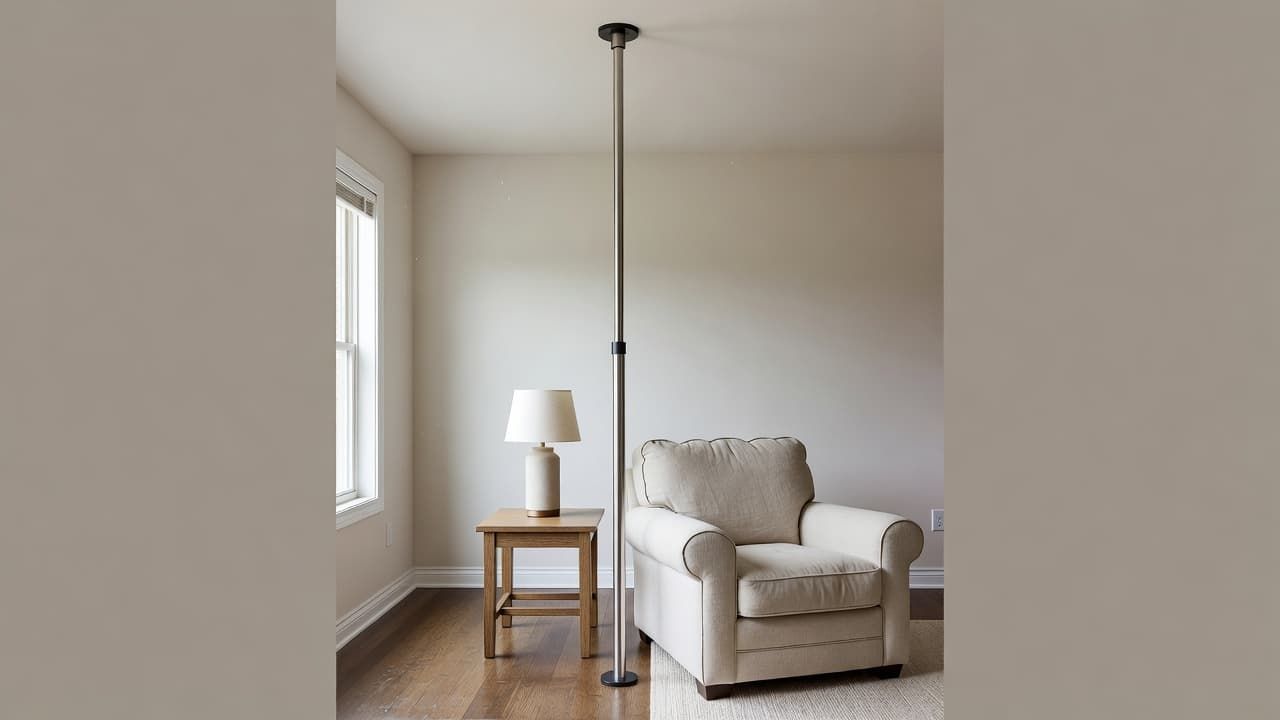
Best transfer scenarios for a pole
A transfer pole isn't better in every room. It shines in a few specific situations where you need stability exactly where you move.
Beside the bed or favorite chair
This is one of the clearest cases for using a security pole. Getting up from bed or a soft chair often starts with a forward lean, a push through the legs, and a steady turn. A wall bar may be behind the shoulder or too far away to be effective. A pole can be placed right where the hand naturally reaches, which is particularly helpful for safe bed transfers.
That can assist older adults, people living with limited mobility, and veterans adapting to changes in strength or balance at home. If you are planning significant home modifications, consulting an Occupational Therapist can ensure your setup is safe and effective. It can also help caregivers who want a more predictable transfer setup without rearranging the whole room.
Next to a toilet with an open-side transfer
Some toilet setups don't have a strong or useful wall in the right place. That happens often when the toilet sits in a wider bathroom, when the best approach is at an angle, or when a wheelchair user transfers from the open side.
In those cases, a vertical pole may give better control during the stand, pivot, and lower sequence. The support is closer to the person instead of being stuck behind them on the wall. That can make the movement smoother and less awkward.
In open areas where walls don't help
Living rooms, bedrooms, and transition spaces often have the same problem. The need for support is real, but the wall is too far away to matter. That is where the whole debate around a transfer pole versus grab bars becomes clear. If there is no wall where the hand needs to go, the bar loses its advantage.
This is also why many families planning
an accessible home renovation look at the transfer path first. Equipment works best when it matches the way the person already moves through the room.