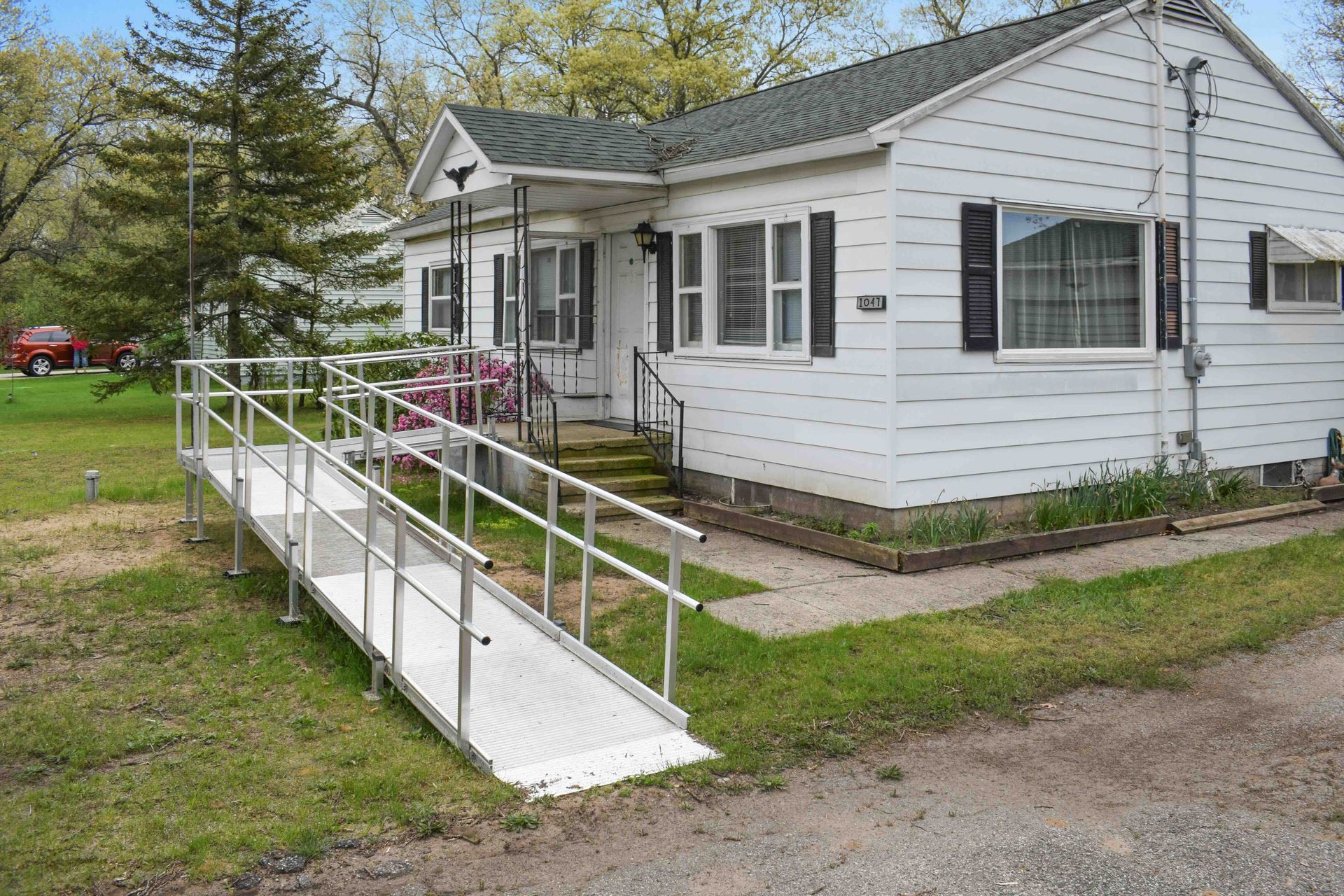
Zero Step Entry Retrofit Options for Existing Homes: Curb Cut, Porch Rebuild, or Graded Walkway

LBF Team • February 4, 2026

A front step can feel small until you’re trying to cross it with limited mobility, a wheelchair, a walker, or sore knees after surgery. For many families, that one rise becomes the line between “I can go out when I want” and “I’ll wait for help,” hindering their ability to age in place independently.


A well-planned zero-step entry retrofit removes that barrier without making your home look like a clinic. The goal is simple: reach the door with a smooth approach, a safe landing, and a threshold that doesn’t catch wheels.


This guide breaks down three proven retrofit paths, what each one involves, and what to watch for, especially water and winter conditions.

Key Takeaways

  • A zero-step entry retrofit creates a zero-threshold entry to the door, with a stable approach, a level landing, and a low-profile threshold that does not catch wheels.


  • Three common retrofit paths, serving as alternatives to traditional wheelchair ramps, are a graded walkway (most subtle look), a porch rebuild with a flush threshold (best for a true step-free doorway), and a curb cut with a short wheelchair ramp (works well from a driveway or sidewalk).


  • Most designs target a gentle slope, a landing area (often about 5 feet by 5 feet), wider doorways with a clear opening of at least 32 inches, and a threshold around 1/2 inch or less with beveled edges.


  • Drainage and winter safety can make or break the project; water must shed away from the house, and surfaces should stay stable through freeze and thaw.


  • Essential safety features include handrails and non-slip surfaces to ensure stability and prevent slips.


  • Typical installed cost ranges are about $2,500 to $12,000 for a graded walkway, including a concrete slab, $6,000 to $25,000+ for a porch rebuild, and $1,500 to $8,000 for a curb cut plus short ramp installation with options like aluminum wheelchair ramps.

Are you looking for an expert resource in accessible spaces, special modifications for persons with mobility challenges, wheelchair accessibility, and more? Contact Lakeshore Barrier Free today.

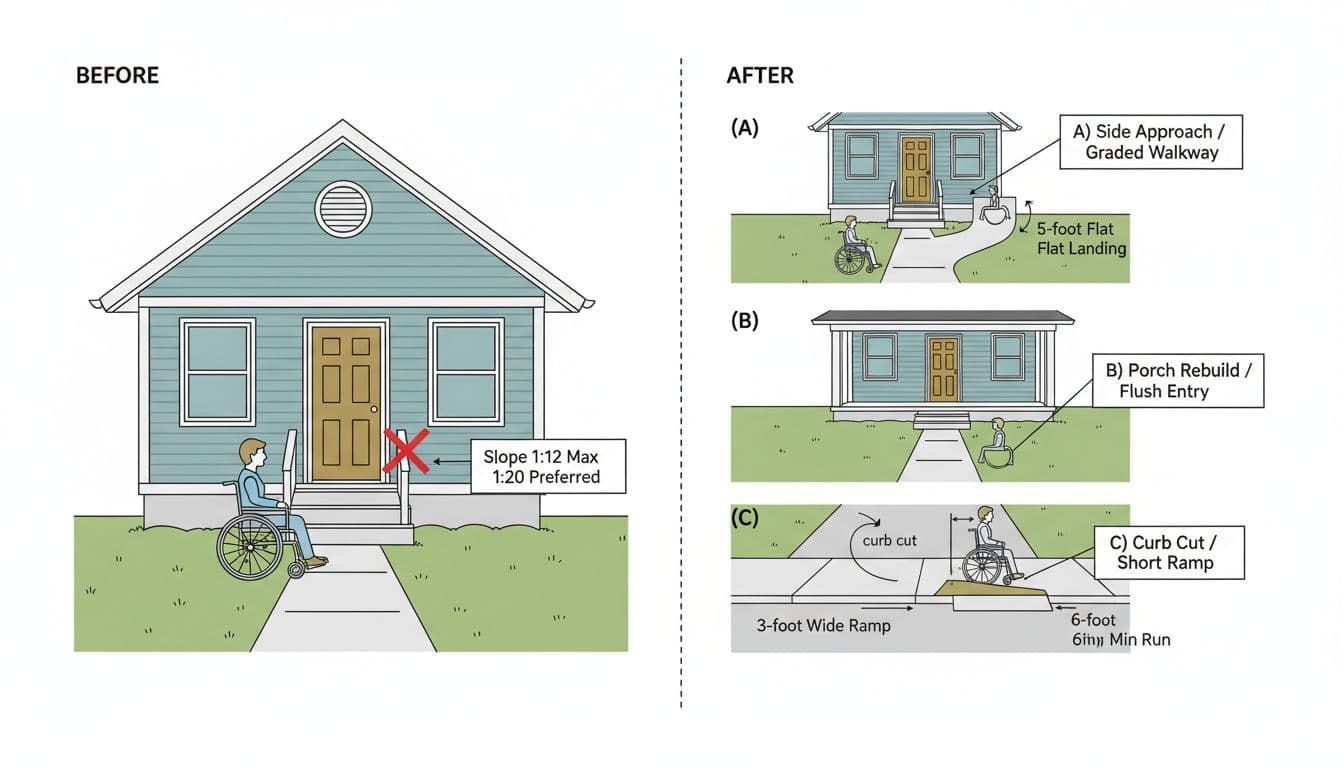
Diagram showing before and after accessibility modifications to a house entry, including a wheelchair user.

What “zero-step” really means at the door

“Zero-step,” which achieves a zero-threshold entry as the structural goal, is more than removing a step. A safe entry also needs the right geometry and water control. Many residential pros use public accessibility guidance as a starting point, then confirm details with local codes and site limits. For slope and landing concepts that often guide ramp and walkway design, see the ADA Accessibility Standards. (ADA rules apply to public spaces, but the slope and landing ideas are still useful.)


Common best-practice targets from universal design that contractors often aim for:

  • A gentle approach (1:20 slope is comfortable when there’s room; steeper runs need more care).
  • A level landing at the door (often about 5 feet by 5 feet so a chair can stop, turn, and manage the handle).
  • Adequate, clear door opening via wider doorways (many aim for 32 inches minimum clear).
  • A low-profile threshold (often 1/2 inch or less, with beveled edges).


These retrofits promote visitability, helping guests with disabilities access the home more easily. Here’s a quick way to compare these accessibility solutions across the three retrofit paths:

RETROFIT PATH WORKS BEST WHEN TYPICAL INSTALLED RANGE
Graded Walkway Plenty of yard length and you want a natural look $2,500 to $12,000
Porch Rebuild Existing porch is failing, too small, or you need a flush threshold $6,000 to $25,000+
Curb Cut + Short Ramp Driveway/sidewalk is the easiest approach line $1,500 to $8,000

For additional residential retrofit ideas (beyond entries), the HUD mobility retrofit guide is a helpful reference to share with homeowners and caregivers.


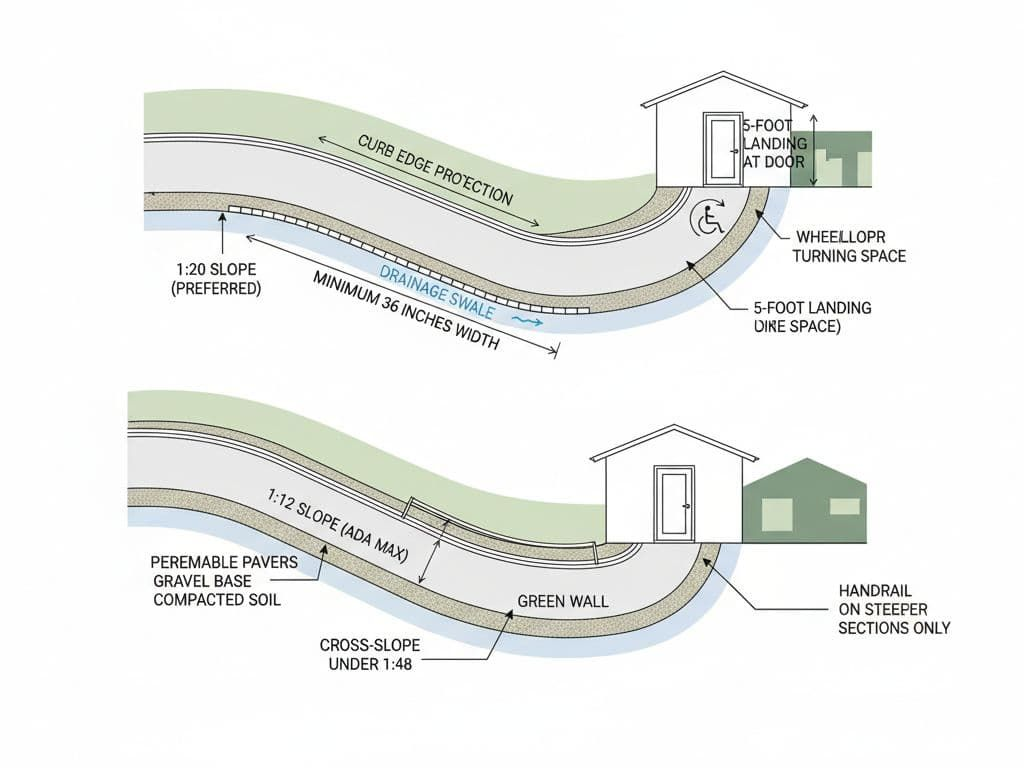
Two diagrams comparing stormwater drainage: one with curb and gutter, the other with a bio-swale.

Option 1: Graded walkway (the most “invisible” zero-step entry retrofit)

When it works best: A graded walkway shines when you have distance to “spend” in the yard, providing a subtle alternative to more industrial-looking wheelchair ramps. If the front door sits 18 inches above grade and the yard layout creates architectural barriers, you may need a long run to keep the slope comfortable. Side-yard routes often work better than straight-on front approaches.


Construction overview (typical sequence): Start with layout and elevations, then stake the route and confirm where the landing will sit at the door. Next comes excavation and base prep (compacted crushed stone is common under a concrete slab, pavers, or composite surfaces). Build the landing first, then shape the sloped runs to meet it. Add edge protection (a small curb or upstand helps keep wheels from slipping off). Finish with a surface that stays stable through freeze and thaw.


Drainage and waterproofing risks: This option can accidentally send water toward the house if the cross-slope is wrong or the landing is pitched back. A simple rule: water should move away from the foundation, not pool at the threshold, and create tripping hazards. Plan a shallow swale, area drain, or perimeter drain where needed, and keep downspouts from dumping onto the approach.


Impact on landscaping and driveway: Expect soil moving, plant removal, and possible regrading near beds or fences. The upside is that the walkway can look like a normal path, especially with pavers or broom-finished concrete. For design tips that help ramps feel like part of the home, see zero-step entry design tips.


Maintenance (ice and snow): Longer approaches mean more shoveling. Pavers can heave if the base isn’t done right, and they can collect ice in joints. Many homeowners do well with non-slip surfaces like a textured concrete finish, good exterior lighting, and a plan for storing snow so meltwater doesn’t refreeze across the path.


Ballpark cost and drivers: $2,500 to $12,000 installed. Costs rise with retaining walls, long runs, common accessories like handrails, utility relocations, premium surfaces, and drainage features.

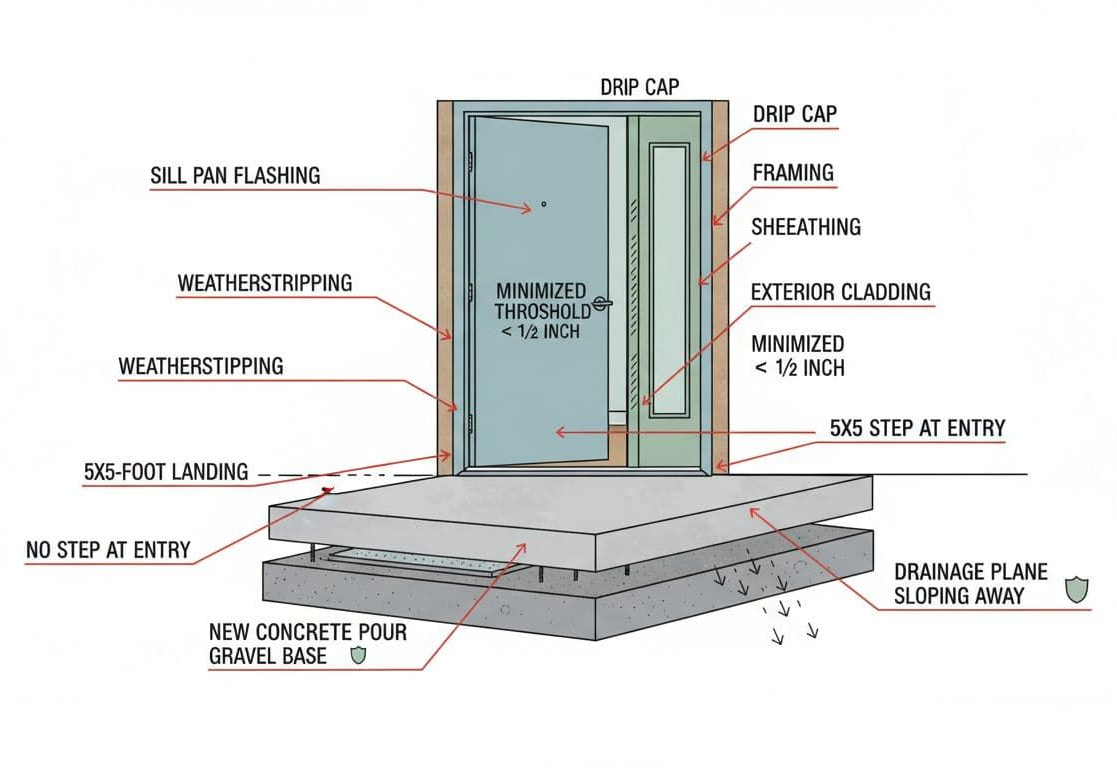
Diagram of a door installation showing layers of materials and components, including flashing and weather stripping.

Option 2: Porch rebuild with a flush threshold (best for a “true” step-free doorway)

When it works best: Choose a porch rebuild when the existing stoop is crumbling, too small for a safe landing, or set at the wrong height. It’s also the go-to fix when a family wants a clean “no bump” transition for a disability-related access need, including power chairs and scooters that hang up on tall thresholds.


Construction overview (typical sequence): Demolition comes first, then a new foundation or piers (often below frost depth in cold climates). The crew sets forms or framing to establish the landing elevation at the door with sufficient maneuvering space, typically 5 feet by 5 feet. Next, the landing surface is built (concrete, framed deck with membrane, or a hybrid). Finally, the door area is tuned: threshold selection, weatherstripping, entry door hardware such as lever-style handles, and any needed door adjustments so it swings cleanly over the landing.


Drainage and waterproofing risks: This is where projects succeed or fail. A rebuilt porch that’s perfectly level but drains toward the house can cause rot, leaks, and ice at the threshold. Aim for water to shed away from the door using proper pitch where allowed, plus flashing details like a sill pan, drip cap, and a clear drainage path. These principles mirror those in bathroom modifications, such as curbless showers. If the door itself sits low, some homes need a door replacement or reframing to keep water out while still achieving a near-flush entry.


Impact on landscaping and driveway: A porch rebuild can change steps, railings, and bed lines. It may also affect how the approach connects, which can trigger a new concrete or a walkway re-route. For many homeowners, that’s acceptable because the finished entry looks intentional, not patched.


Maintenance (ice and snow): The landing is compact and easier to keep clear than a long ramp. Still, watch for meltwater at the threshold. A small canopy, gutters, motion-activated lighting for nighttime safety, and a place to push snow can reduce refreeze hazards.


Ballpark cost and drivers: $6,000 to $25,000+ installed. The biggest drivers are foundation work, porch size, railings, door replacement, waterproofing complexity, and tying into existing siding and trim.


Client note you’ll hear often: “We can finally use the front door again, without feeling like we’re sneaking in through the garage.”

Option 3: Curb cut with a short ramp from driveway or sidewalk (fast access where the grade is close)

When it works best: If the driveway is already near the level of a side door, a curb cut and short ramp can be the quickest zero-step entry retrofit. It’s common for temporary needs, like aluminum wheelchair ramps, and it’s also a solid permanent route for veterans or anyone who wants a dependable daily path from vehicle to door.


Construction overview (typical sequence): First, confirm the approach line from the parking to the door, including a landing area for turning space. Then cut and remove the curb section or replace a section of sidewalk/drive apron. Form and pour the new curb cut with a smooth transition, complete the ramp installation, and build the short ramp and landing to meet the door; consider threshold ramps for transitioning over the door sill. Add edge protection, and install handrails if the slope ends up steeper.


Drainage and waterproofing risks: Curb cuts can redirect stormwater. If the driveway pitches toward the garage or house, the new low point may funnel water where you don’t want it. Plan for drainage before concrete is poured, sometimes with a channel drain or regrading.


Impact on landscaping and driveway: This option is hardscape-heavy and may reduce planting space. It can also affect where snow piles go, which matters in winter states.


Maintenance (ice and snow): Driveways get plowed, which helps, but curb cuts can become an ice dam if meltwater collects. Keep transitions smooth so a plow blade doesn’t chip edges, and use de-icer that’s compatible with your concrete and nearby plants.


Ballpark cost and drivers: $1,500 to $8,000 installed. Costs depend on concrete demolition, driveway thickness, reinforcement, finishing, drainage additions, and whether you need a longer ramp run to keep the slope comfortable.


Site assessment checklist and hiring the right pros

Before you price anything, walk the site with a tape measure and a notepad. A good assessment prevents expensive rework later.


Site assessment checklist

  • Measure the rise from grade to threshold, then estimate the required run for a comfortable slope.
  • Confirm a level landing size at the door and a safe place to stop and turn.
  • Check door clearance, hardware reach, and whether the door swings over the landing.
  • Identify water paths, downspouts, and any spot where ice forms now.
  • Locate utilities (gas, electric, irrigation), and note window wells and vents.
  • Review snow storage and where a plow or shovel will push snow.
  • Confirm permits and inspections for ADA compliance with the local building department.


Who to hire, and why it matters: A general contractor can coordinate the full scope, but many projects also need a concrete contractor, carpenter, and landscaper. For complex cases, an accessibility specialist or occupational therapist can help match design to real-life transfers and use of mobility aids. Proper home modification planning like this helps people avoid institutionalization by staying safely in their own homes. If funding is a concern, start with housing grants for disabled veterans and ask your contractor how their proposal can support documentation for assistance programs. This is where we at Lakeshore Barrier Free thrive. Contact us if you have any questions about your entryway and how you can make it a zero-step entry.


Frequently Asked Questions About Zero-Step Entry Retrofits


What is a “zero-step entry” in a real home?

A zero-step entry means you can reach and pass through the doorway without stepping up or down. It promotes visitability by eliminating architectural barriers like steps, and it also includes a smooth approach, a safe landing at the door, and a threshold that does not stop wheels or trip feet.


Which retrofit option looks the most “natural” from the street?

A graded walkway usually blends in best because it can look like a standard path. With enough yard length, the slope can stay gentle, and the route can be shaped to fit the landscaping. This choice benefits a single-story home especially well.


When is a porch rebuild the best choice?

A porch rebuild makes sense when the stoop is failing, too small for safe maneuvering space, or set at the wrong height for a flush entry. It is often the best route when the goal is a clean, near-flush threshold for wheelchairs, scooters, or walkers, supporting aging in place.


What is the biggest mistake homeowners make with zero-step entries?

Drainage is the most common failure point. If the landing or approach sends water toward the house, you can end up with leaks, rot, pooling at the threshold, and ice in winter. Poor drainage can also create tripping hazards and issues with threshold ramps, so the plan should move water away from the foundation and provide a clear drainage path.


What should I measure before I call for estimates?

Measure the rise from the ground to the threshold, then estimate the run needed for a comfortable slope. Also, confirm you have space for a level landing at the door, check door swing and clear width for mobility aids, and note where water flows and where ice already forms. Consider entry door hardware like lever-style handles and motion-activated lighting.


How do zero-step entries fit into broader accessibility upgrades?

These updates often coincide with bathroom modifications such as curbless showers. Incorporating ADA compliance and visitability features helps prevent institutionalization by enabling residents to remain safely at home long-term.


Conclusion

A safe, step-free entry isn’t a luxury; it’s how people keep their routines and their freedom. The right home modifications choice, particularly for single-story homes where they are most common, depends on grade, water, winter maintenance, and how the entry will be used every day. If you’re deciding between a graded walkway, a porch rebuild, or a curb cut route, start with measurements and drainage, then confirm permits locally. A well-built zero-step entry retrofit should feel simple because your front door should be the easy part.

Steven Speckman, the owner of Speck Designs in front of mountains.

ABOUT THE AUTHOR

The copywriting team at Speck Designs creates the content for the Lakeshore Barrier Free blog. Speck Designs is a creative agency based in Hastings, Michigan that loves helping local businesses grow with clear messaging and strong marketing. Every post is built using SEO and content best practices, with topics people are actively searching for, so readers get helpful answers they can use right away.

TALK TO THE EXPERTS OF LAKESHORE BARRIER FREE TODAY!

We believe that everyone should have access to every area of their home! We work directly with you to make sure that every grab bar, bathroom sink, kitchen countertop, patient lift, and more is at the perfect location for you and your loved ones. Call us at (616) 477-2685 or email us at Info@LakeshoreBarrierFree.com

Share this blog

Aluminum ramp with handrails leading to a building's entrance. Outdoor setting with greenery.
By LBF Team January 16, 2026
West Michigan wheelchair ramp cost guide for 2026, see price ranges for rentals and permanent ramps, plus what length, materials, and permits add.
Man in a wheelchair working on a laptop at a desk in a living room, smiling.
By LBF Team January 13, 2026
Start your first accessible renovation with 10 practical steps, ramps, wider doors, safer baths, and a plan that limits mess in West Michigan.
Man in wheelchair working on laptop at a desk in a home office.
By LBF Team January 7, 2026
Renovating for Two helps you plan a home that feels normal, with wheelchair access, safer bathrooms, better entries, and ramps in West Michigan.
Kitchen renovation: black base cabinets, cream upper cabinets, bare walls, countertop, and window.
By LBF Team December 9, 2025
Explore a team approach to disability and home modifications for veterans, therapists, and wheelchair users that builds safe, well-planned living.